
AI vs Photography. What Clients Actually Care About in 2026
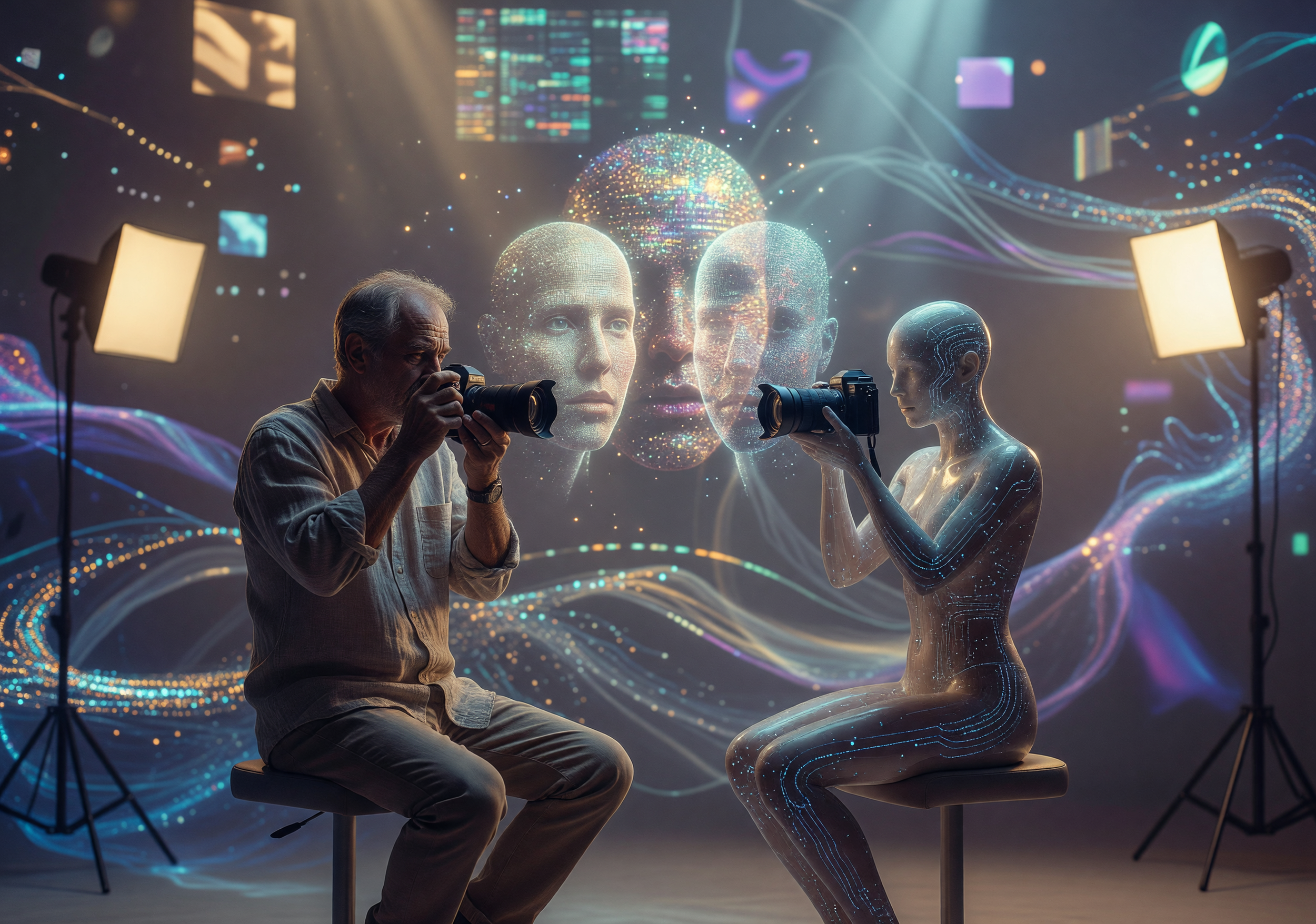
AI vs Photography. The Wrong Debate
The conversation around AI replacing photography is happening everywhere. But it’s missing the real point.
Clients are not asking whether an image was created with a camera or generated with AI. They are asking one thing:
Does it work?
Does it capture attention.
Does it communicate clearly.
Does it drive results.
That’s the shift.
What Clients Actually Value
Across industries, from public sector campaigns to commercial brands, the priorities are consistent:
1. Speed to Market
Campaign timelines are shorter than ever. AI allows teams to move from concept to visual execution in hours instead of weeks.
2. Cost Efficiency
Budgets are under scrutiny. AI reduces production costs without eliminating the need for strategic creative direction.
3. Consistency at Scale
Brands need dozens, sometimes hundreds, of assets across platforms. AI enables scalable content systems that maintain visual consistency.
4. Strategic Thinking Over Tools
Clients don’t pay for tools. They pay for outcomes. The ability to translate ideas into visuals that perform is what matters.
Where Photography Still Wins
This is not the end of photography. Far from it.
Photography dominates in:
Real human connection and authenticity
Documentary-style storytelling
Live events and public engagement
High-trust environments (government, healthcare, community campaigns)
A real moment still carries weight that AI cannot fully replicate.
Where AI Wins
AI excels in areas where speed, flexibility, and iteration matter:
Concept development and rapid prototyping
Social media content production
Campaign variations and A/B testing
Visual ideation before production
AI is not replacing photography. It is expanding what’s possible.
The Real Advantage. Hybrid Creators
The most valuable creatives today are not choosing sides.
They are combining both.
Using photography for authenticity.
Using AI for scale.
Using strategy to connect everything.
That’s where the real competitive edge lives.
Final Thought
The future of visual storytelling is not about tools.
It’s about who can create the most impact, the fastest, with the highest level of clarity.
That’s what clients care about.